Laying XLock
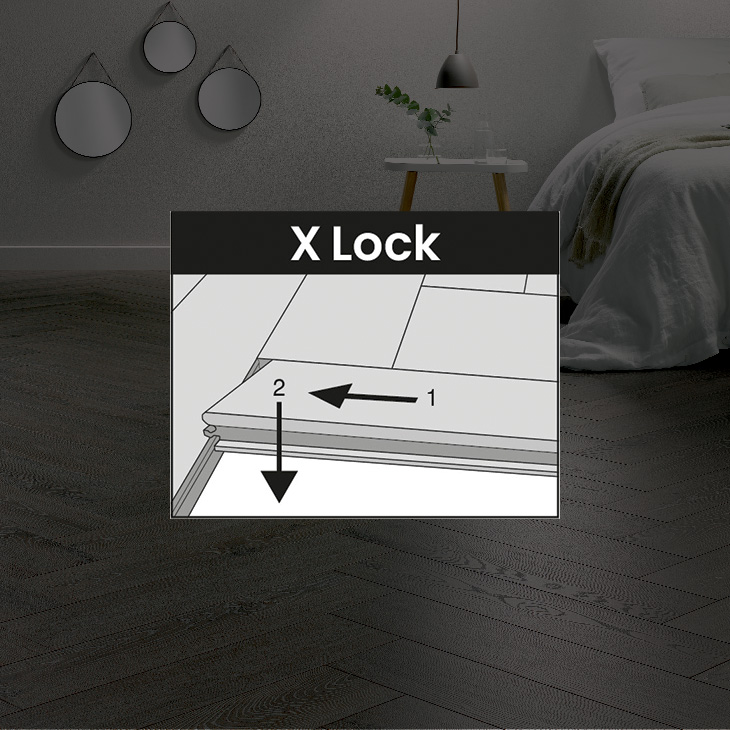

For a successful installation with no unpleasant surprises, follow these simple rules illustrated below. They will guide you step by step to prepare your floor in the best possible conditions.
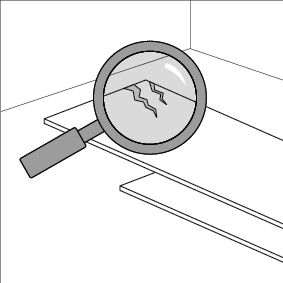
Inspect each plank before installation, they should not be damaged. If you notice any visible defects on a plank, do not install it!
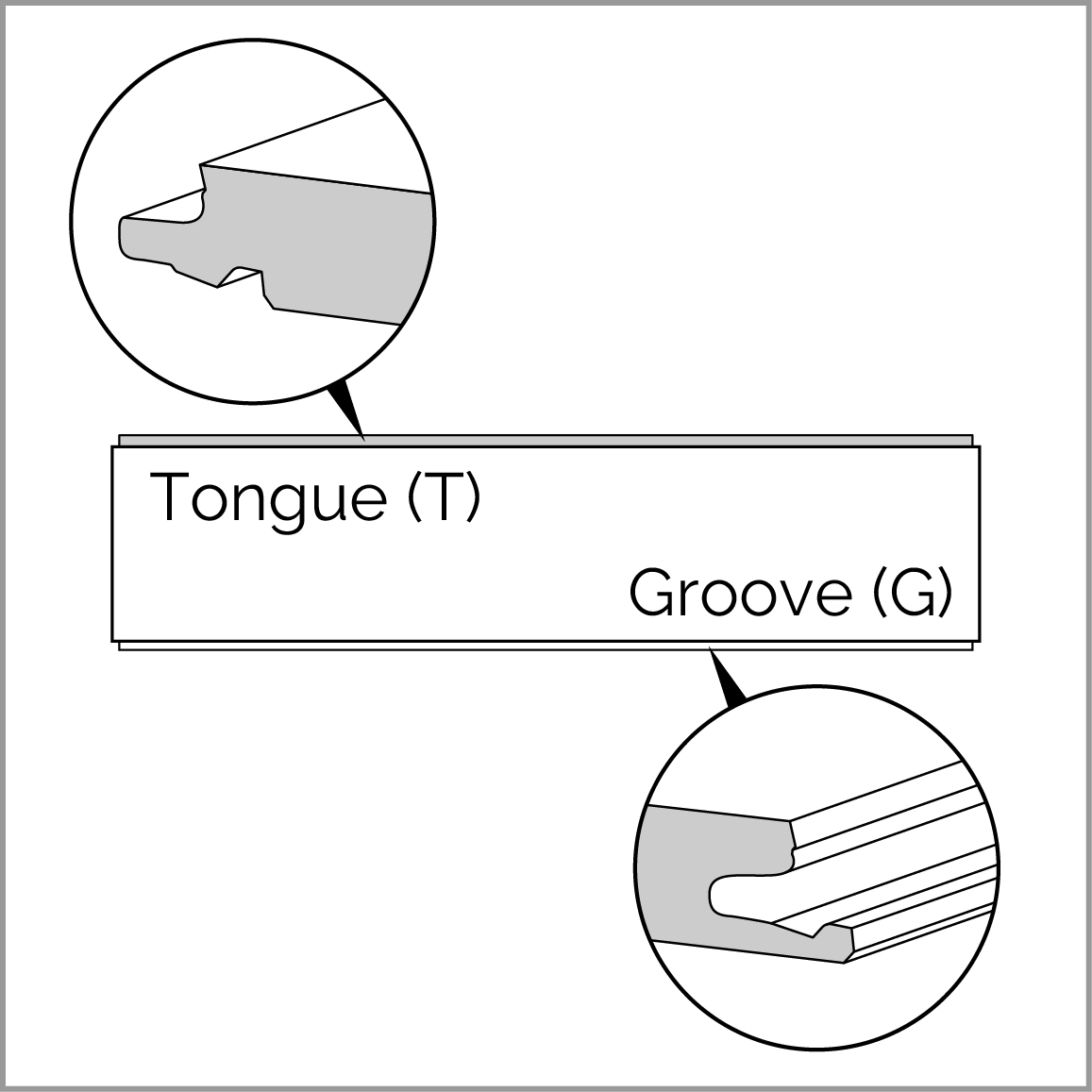
Make sure you can clearly identify the tongue and groove on each plank. These are what allow the planks to be joined together.
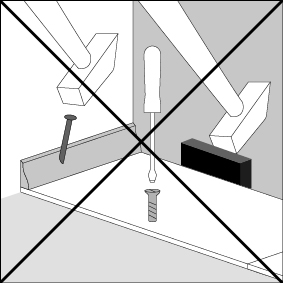
Laminate floorings must not be screwed or glued to the substrate and must be left free to move. The use of a tapping block is not necessary.
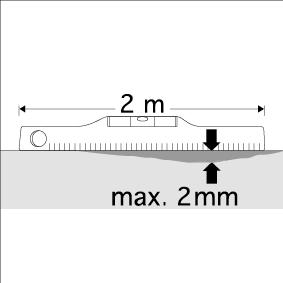
The substrate must be perfectly flat, clean and sound, with a maximum deviation of 2 mm under a 2-metre straight ruler. Level the substrate if necessary.
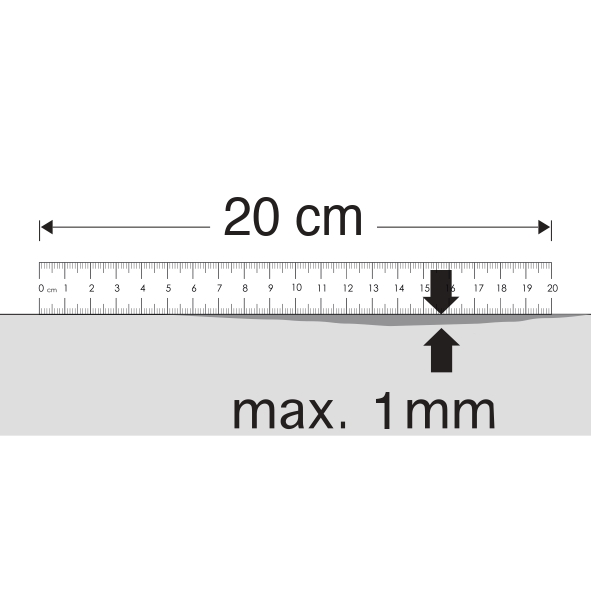
The surface must be perfectly flat, clean and sound, with a maximum deviation of 1mm under a 20cm small ruler. Level the surface if necessary.
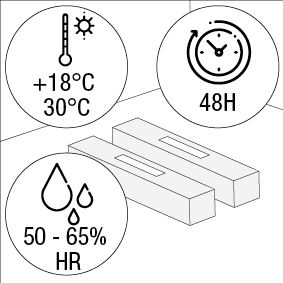
Before installation, leave the product closed in its original packaging, flat, in the room where it will be used for at least 48 hours. Observe the recommended temperatures and humidity levels.
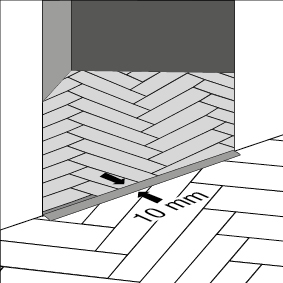
Leave a 10 mm expansion joint at the doorway.
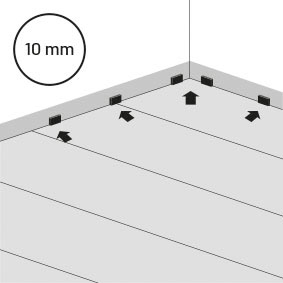
Never lay your laminate directly against the wall. Always leave a 10 mm expansion gap around the perimeter of the room.
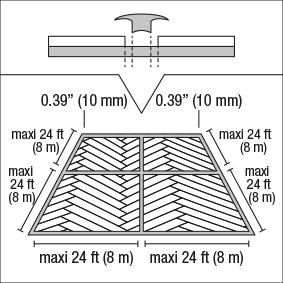
Add a split joint for herringbone installation in rooms larger than 8 x 8 metres.
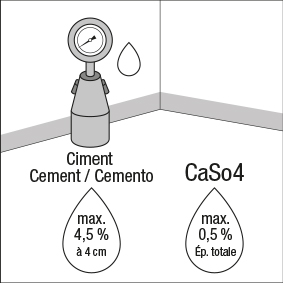
The residual moisture content of the screed, measured using a carbide bomb, must be less than or equal to 0.5% across the entire thickness. For cementitious self-levelling screeds, the moisture content must be 4.5% at 4 cm.
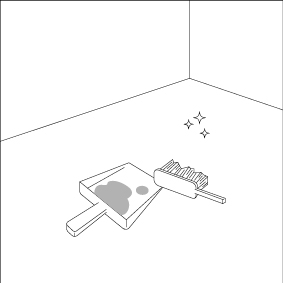
Before installation, thoroughly clean the floor to remove any dust or residue. The floor must be perfectly clean.
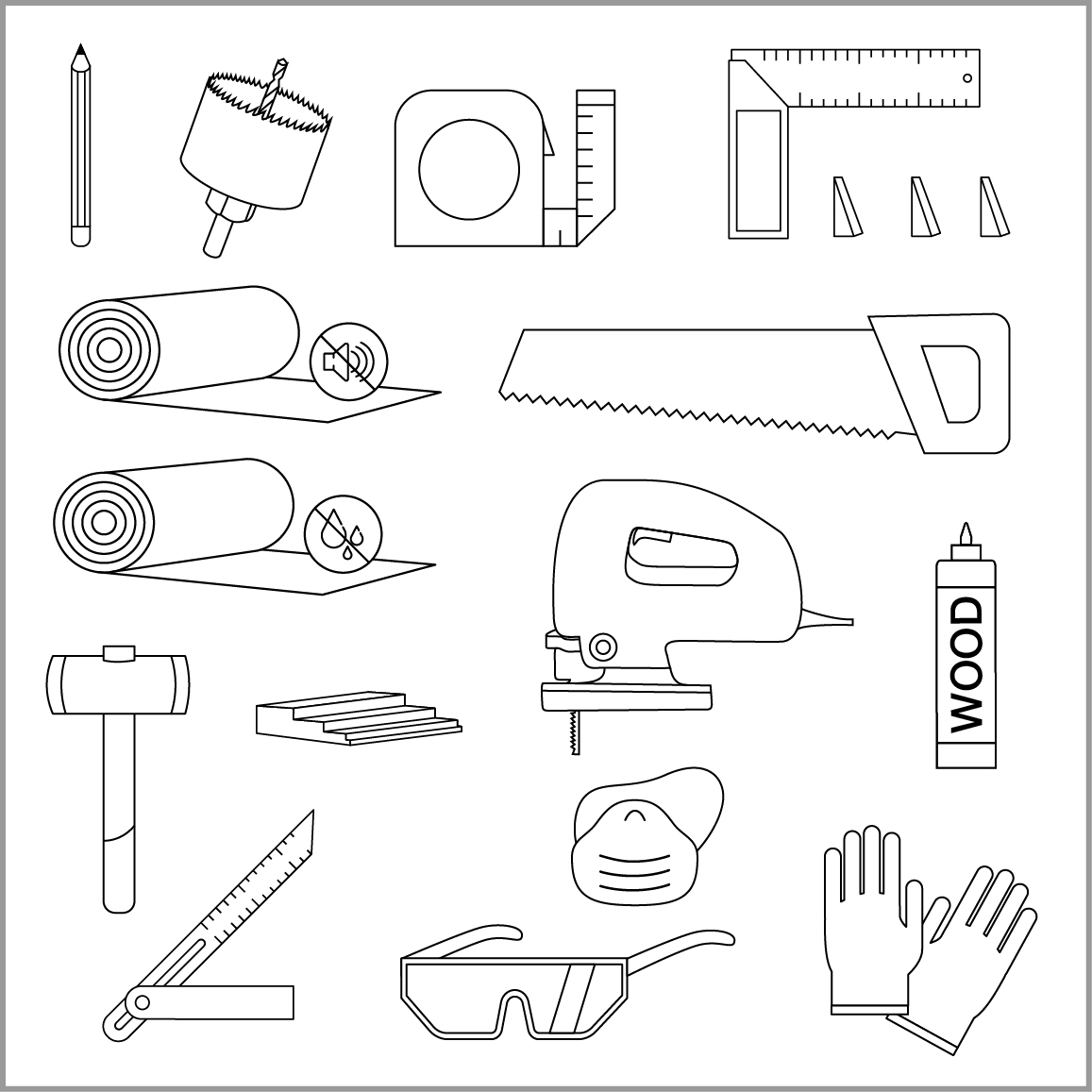
Prepare the right tools:
- 1 pencil
- 1 measure tape
- 1 set square and 1 carpenter's square
- expension spacers
- wood glue
- a hammer and a tapping block
- 1 suitable underlay
- cutting tools (jigsaw, etc.)
D'ont forget to wear gloves, safety glasses and a face mask (PPE)
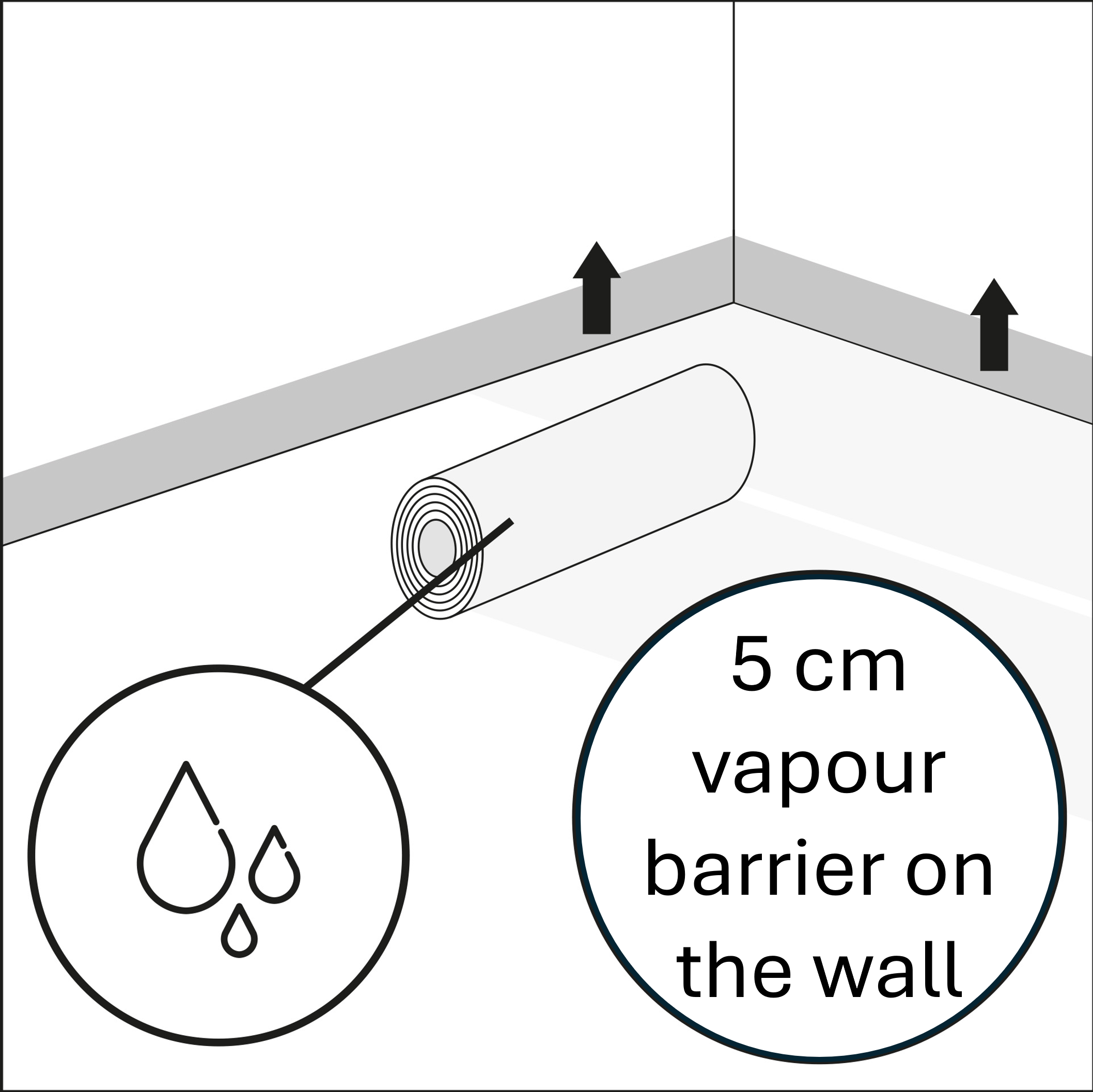
Install a 200 microns vapour barrier film to prevent moisture rising, leaving a 5 cm overlap on the wall.
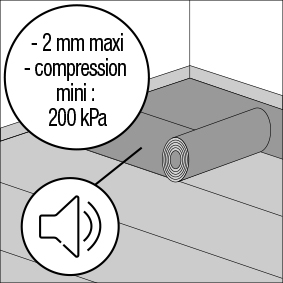
Use a soundproofing or thermal underlay suitable for herringbone laying.
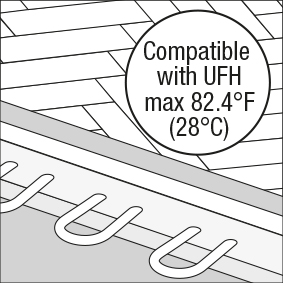
The thermal resistance of Alsaflooring laminate flooring allows it to be installed on low-temperature, electric underfloor heating systems (PRE) and PCR (underfloor heating and cooling systems). Follow the Alsaflooring installation protocol for underfloor heating.
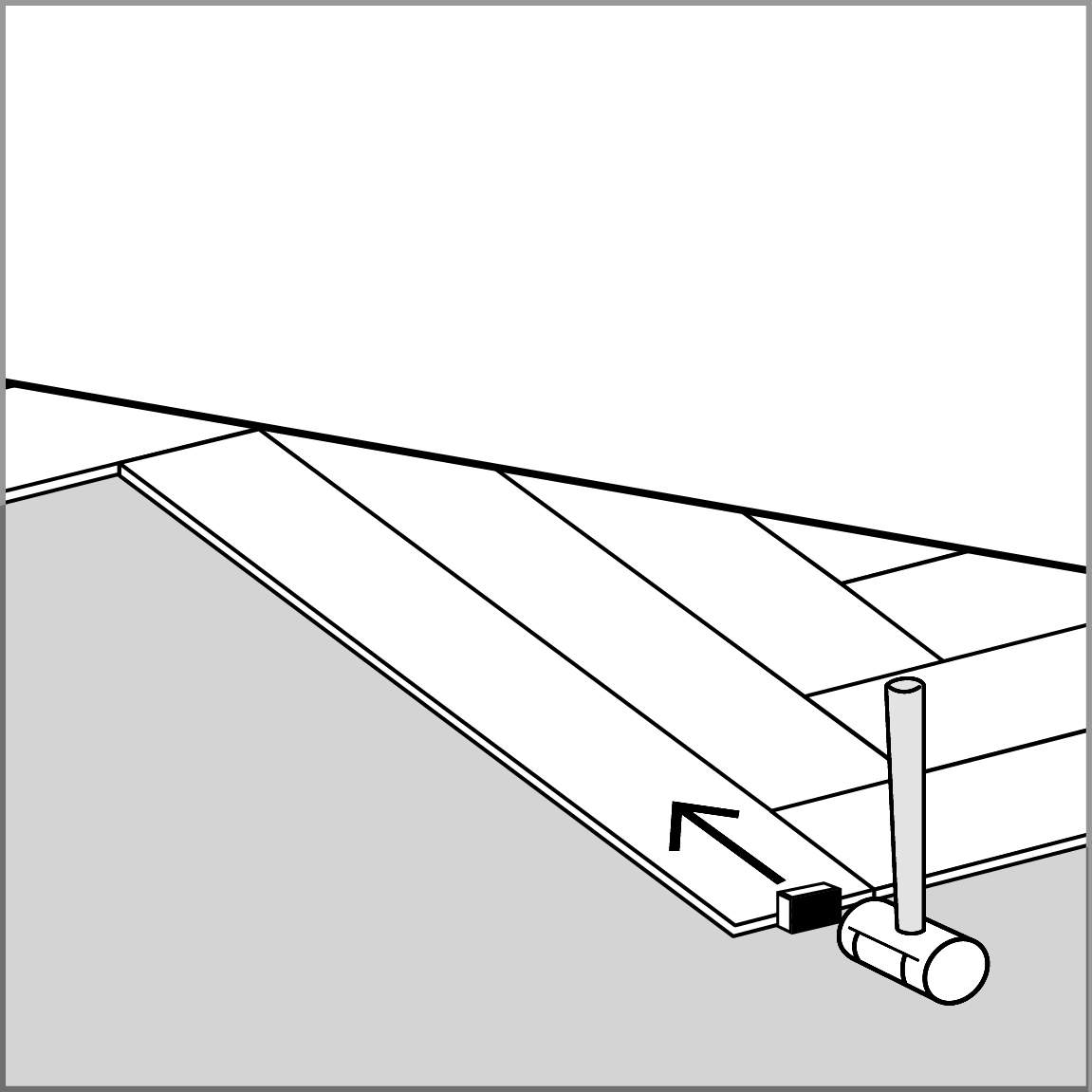
Whenever you install a plank, use a tapping block to ensure the click system engages properly, both on the short side and the long side.
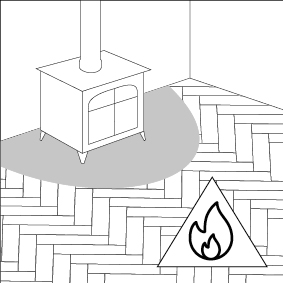
Protect your laminate flooring from ash splashes from stoves or fireplaces.
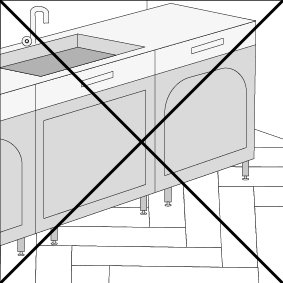
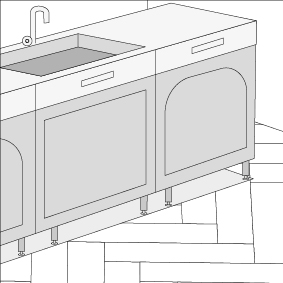
Do not place flooring under kitchen cabinets or central islands. In the event of a point load exceeding 100 kg/cm², it is advisable to use load distribution pads.
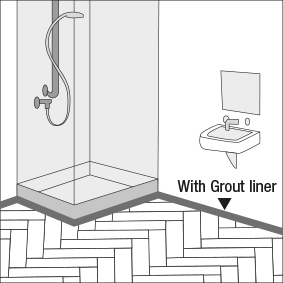
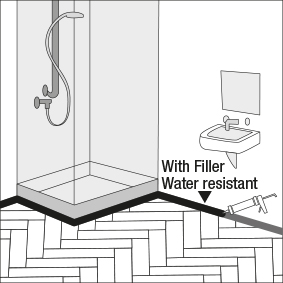
If you purchase a water-resistant (WR) floor, it can be installed in bathrooms. Don't forget to apply grout liner and filler around the perimeter of the room in the expansion joint.
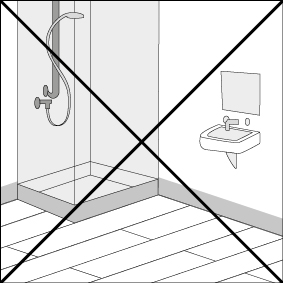
If you purchase a floor that is NOT Water Resistant (WR), installation in bathrooms is prohibited.
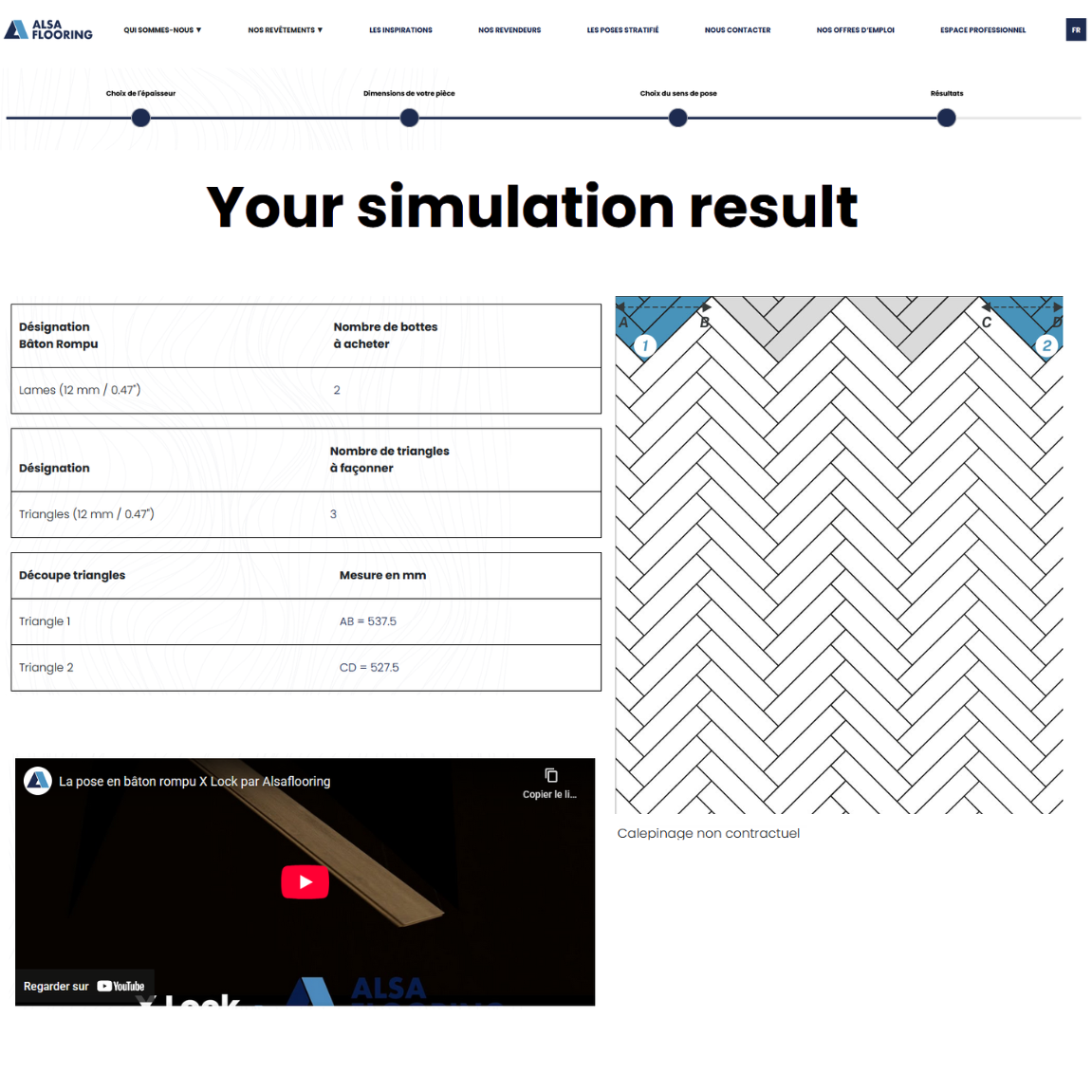
Log in to the calculator available on our website to work out how many starter triangles you need to cut. It will also give you the dimensions for the triangles to be cut along the wall edges.
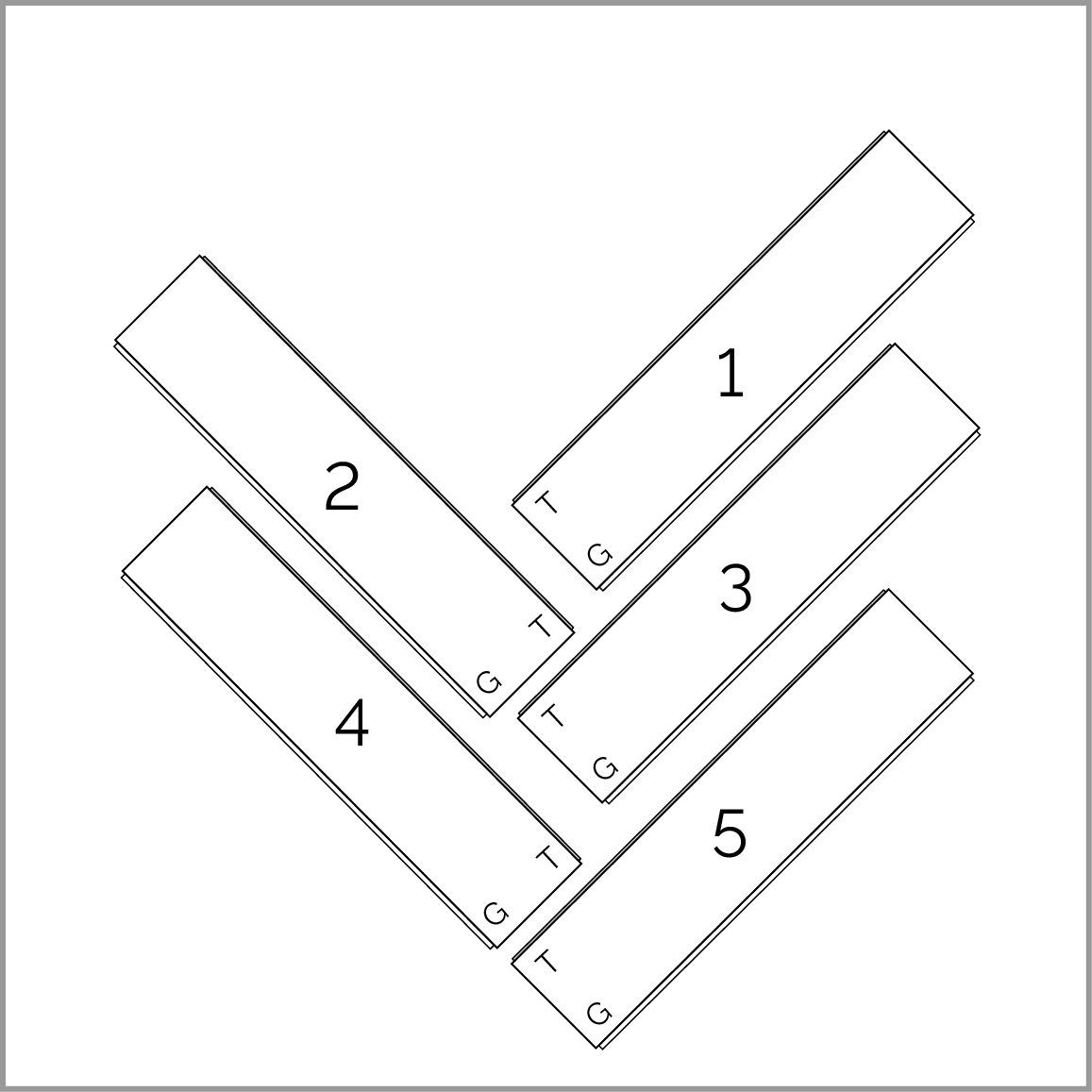
Prepare 5 planks to form the first triangle.
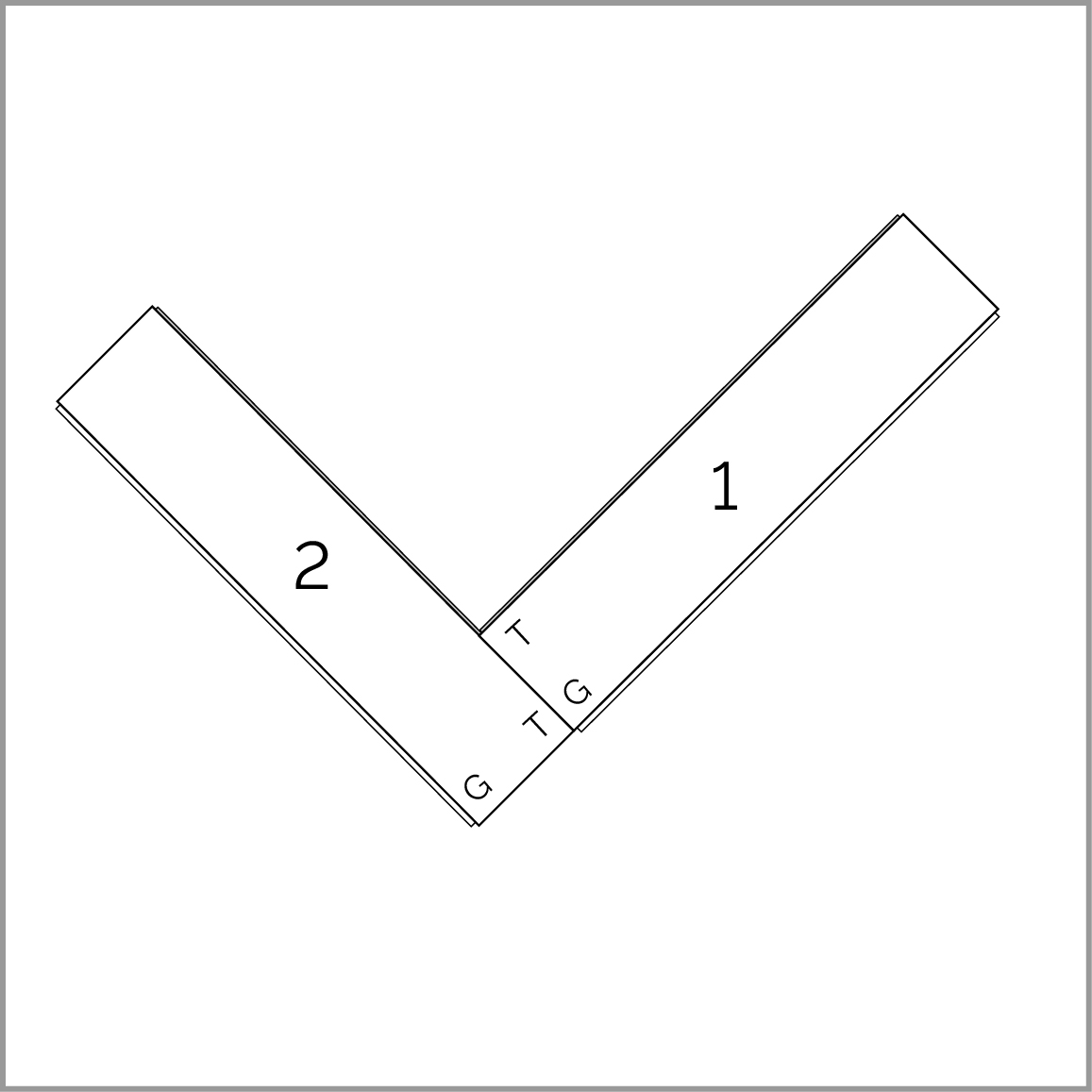
Start by taking two planks and slot them together, as shown in the diagram below. Make sure you follow the T and G assembly directions correctly.
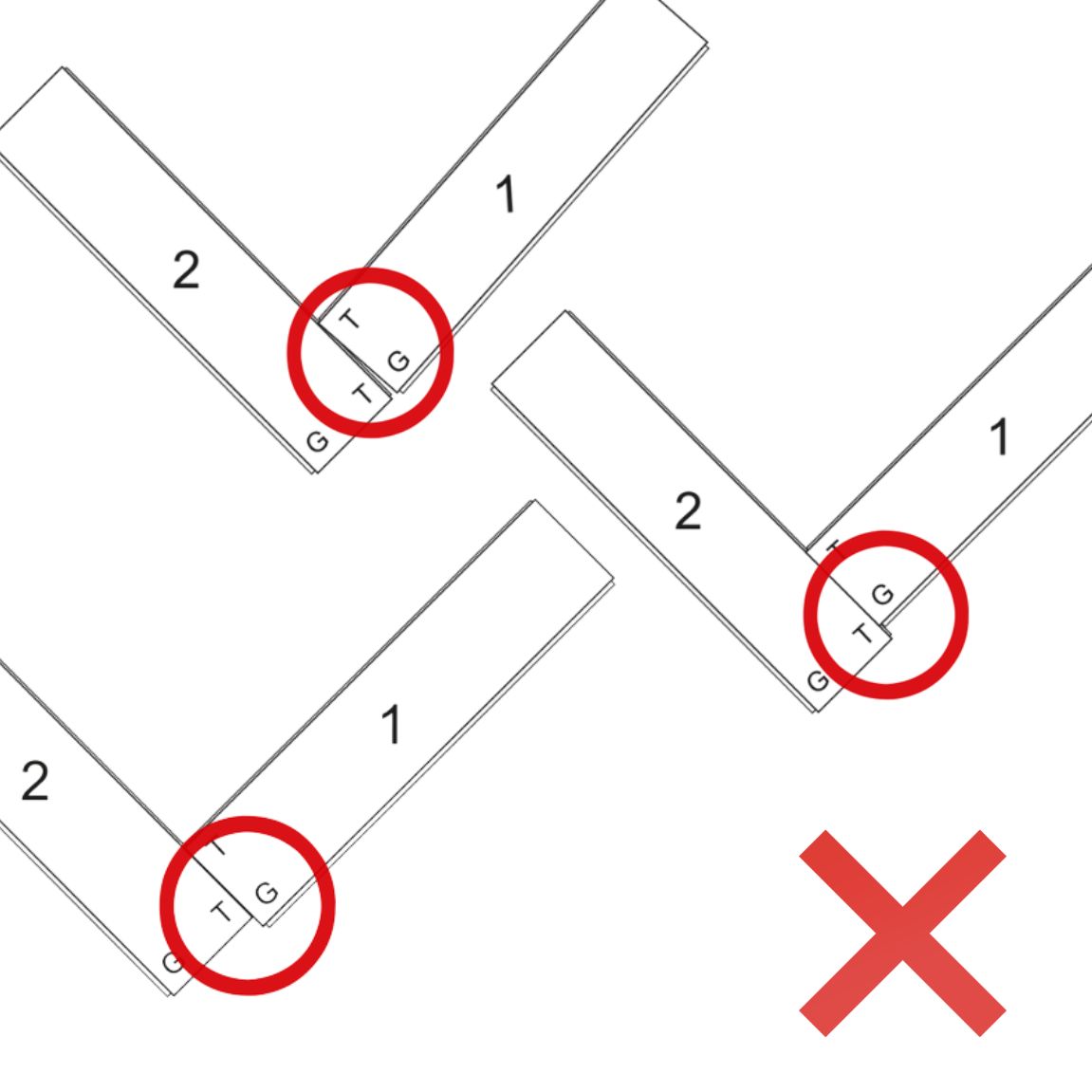
Make sure the planks are positioned correctly and lie flush.
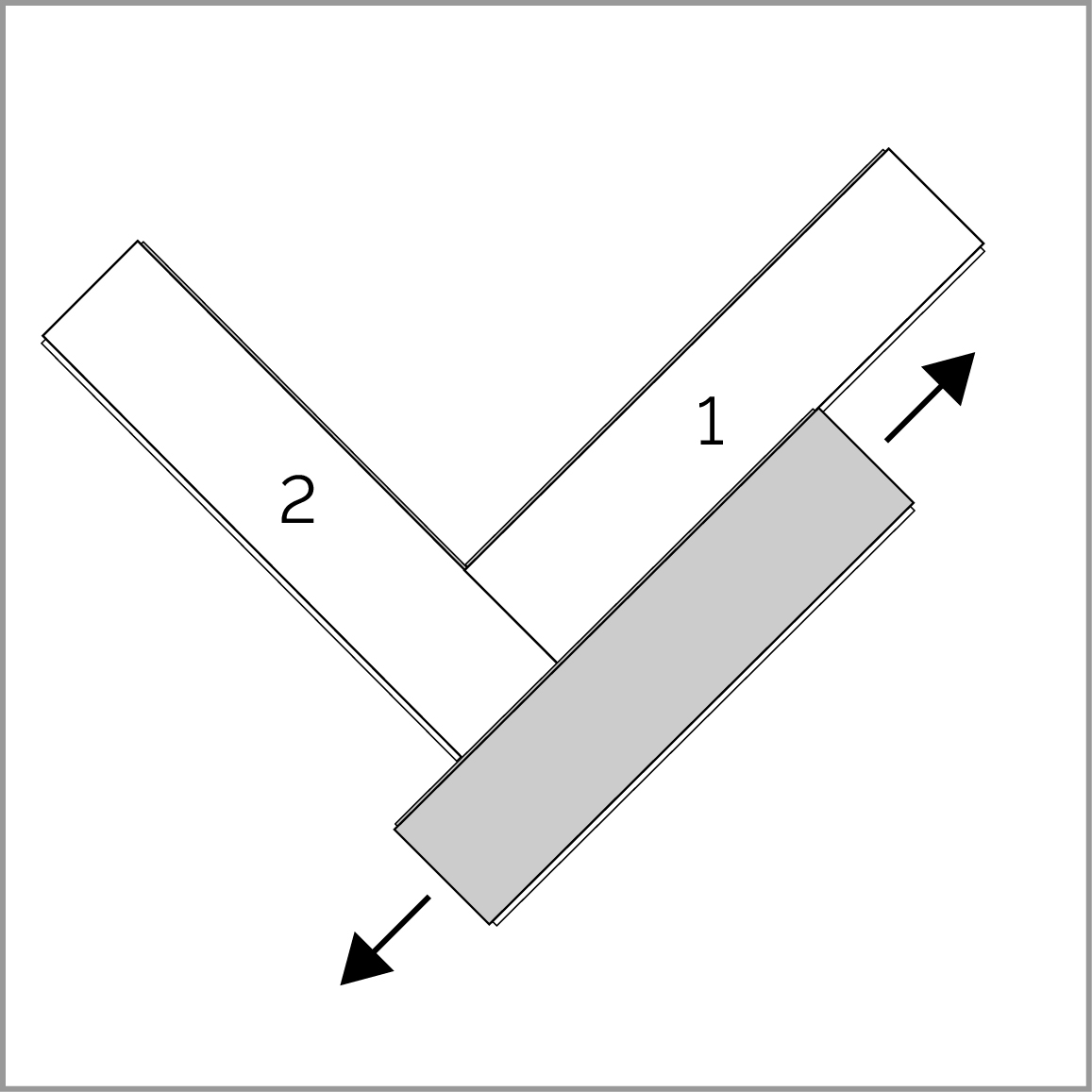
Tip: You can use a plank to check that these first two planks are laid at right angles.
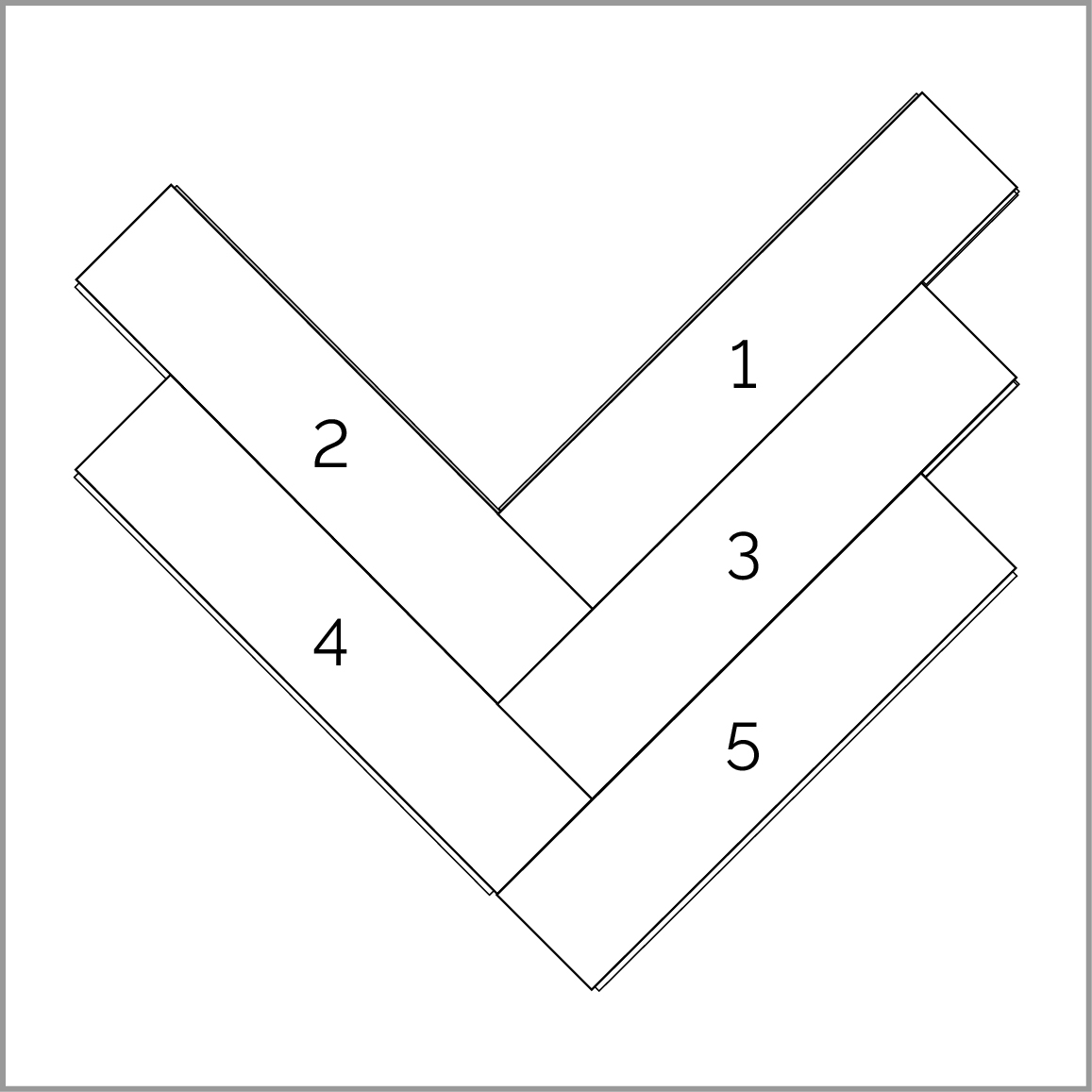
Then lay the remaining three herringbone planks in a staggered pattern on the left and right.
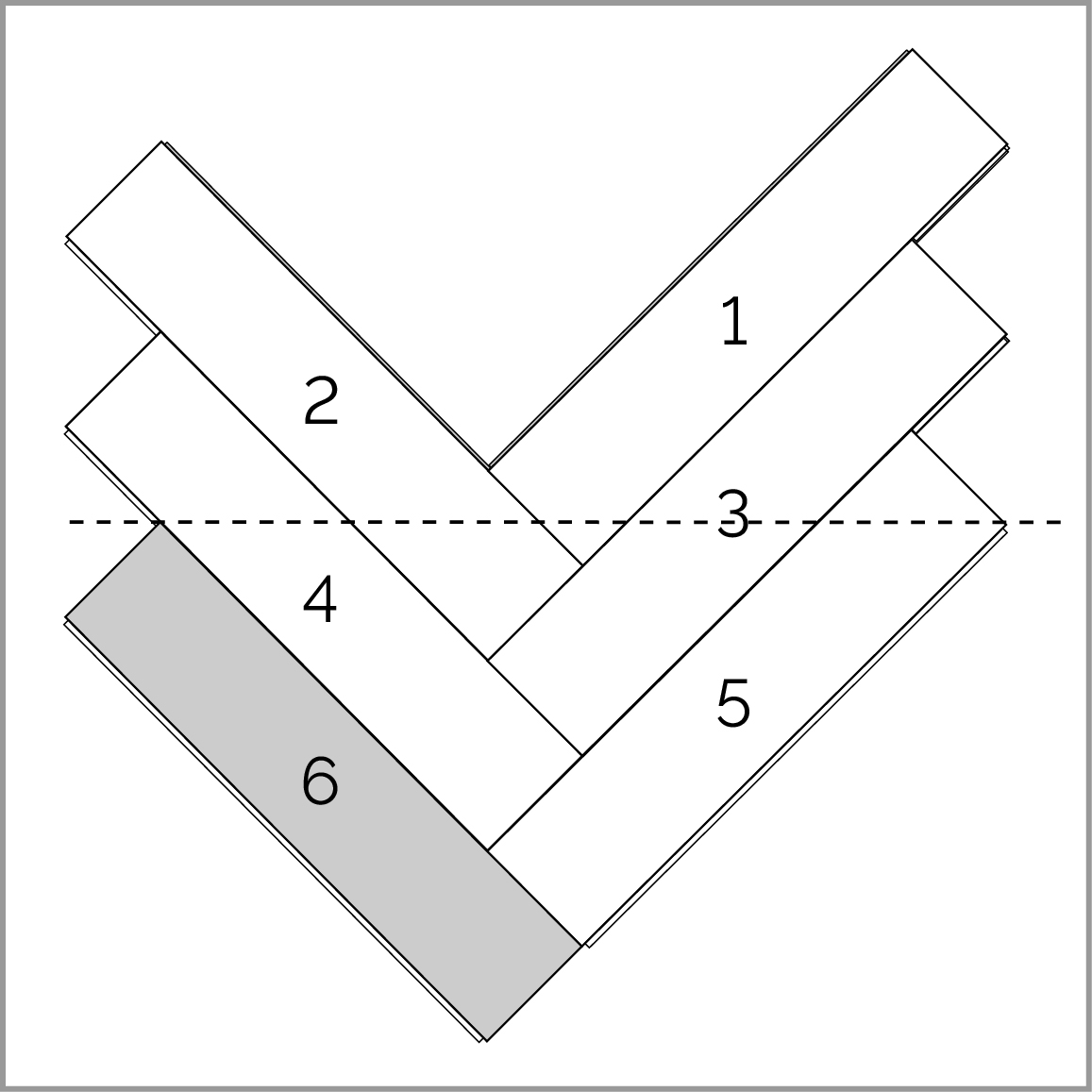
Mark out your cutting line. Tip: Insert a sixth plank. This will help you mark the starting point for your cutting line.
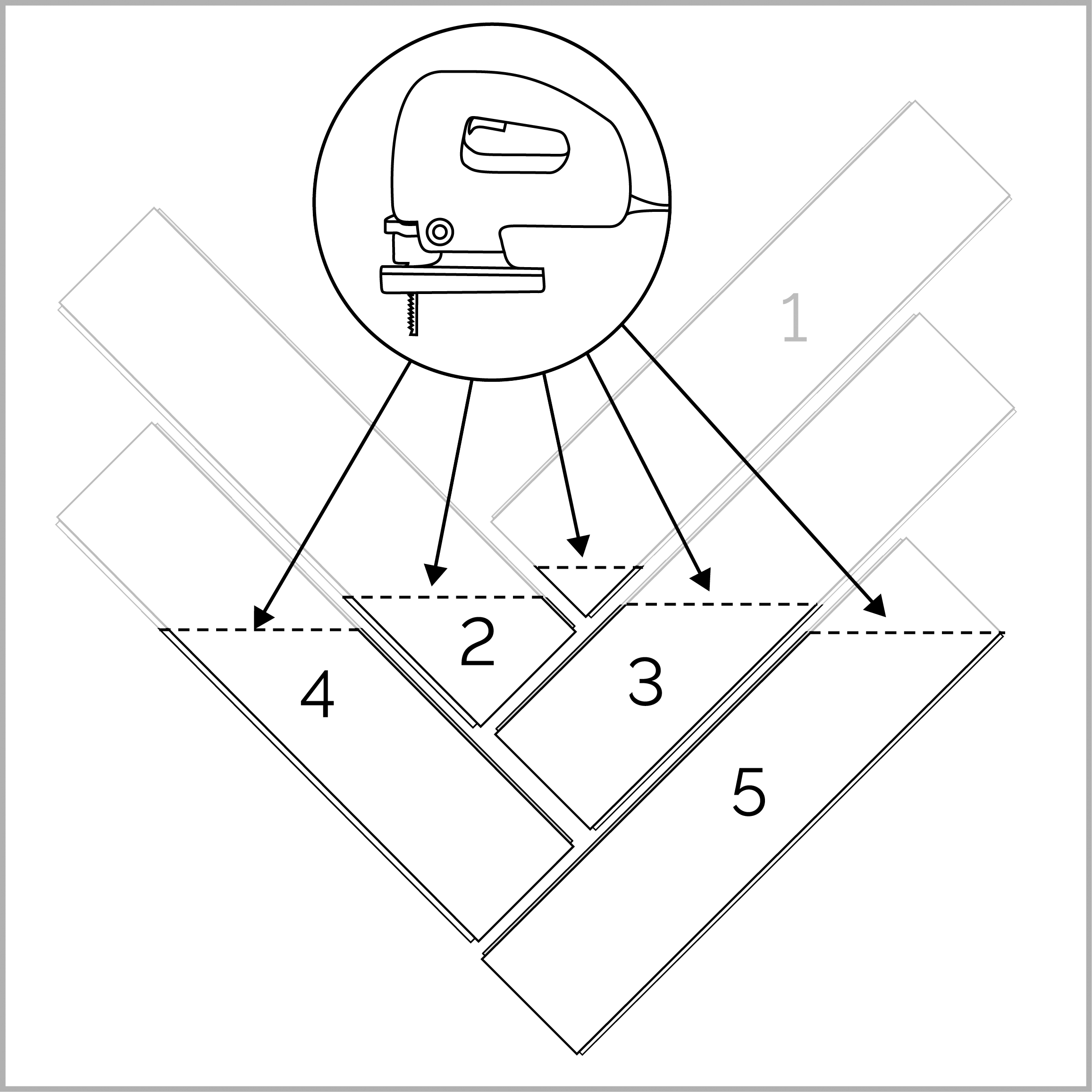
Remove the planks and label them on the back. Cut each plank along the cutting line and reassemble them in the order indicated.
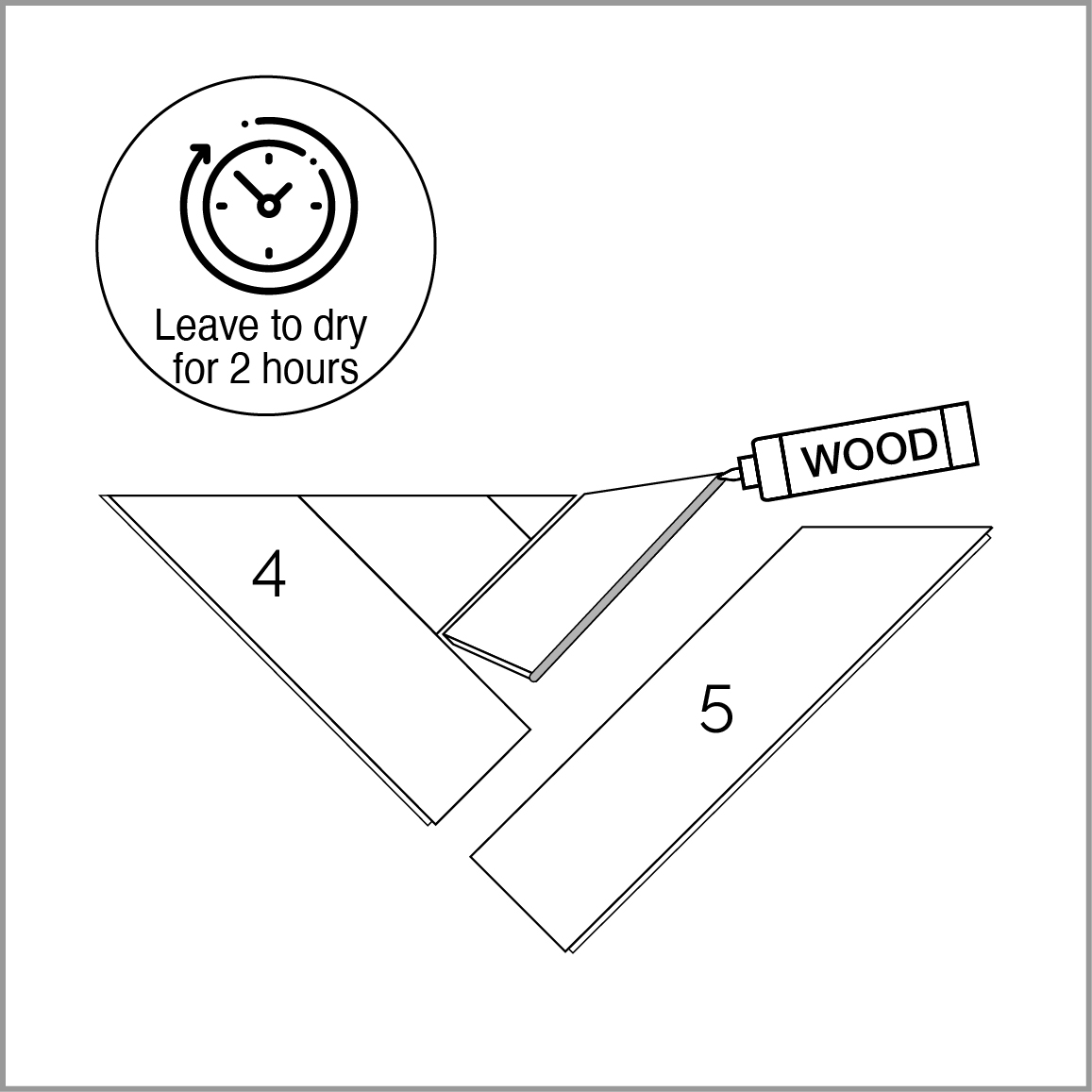
GLUE each cut plank in place to ensure the triangle holds together perfectly. Apply wood glue to the groove.
Wipe off any excess glue with a cloth.
Important: Gluing is mandatory for underfloor heating.
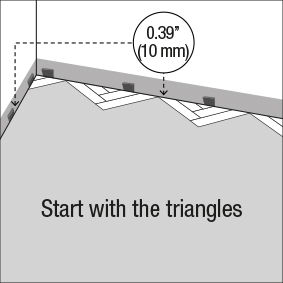
Start by laying the triangles along the wall, leaving a 10mm expansion gap. Centre the triangles as you lay them.
Note: you can use our calculator to work out how many triangles you need.
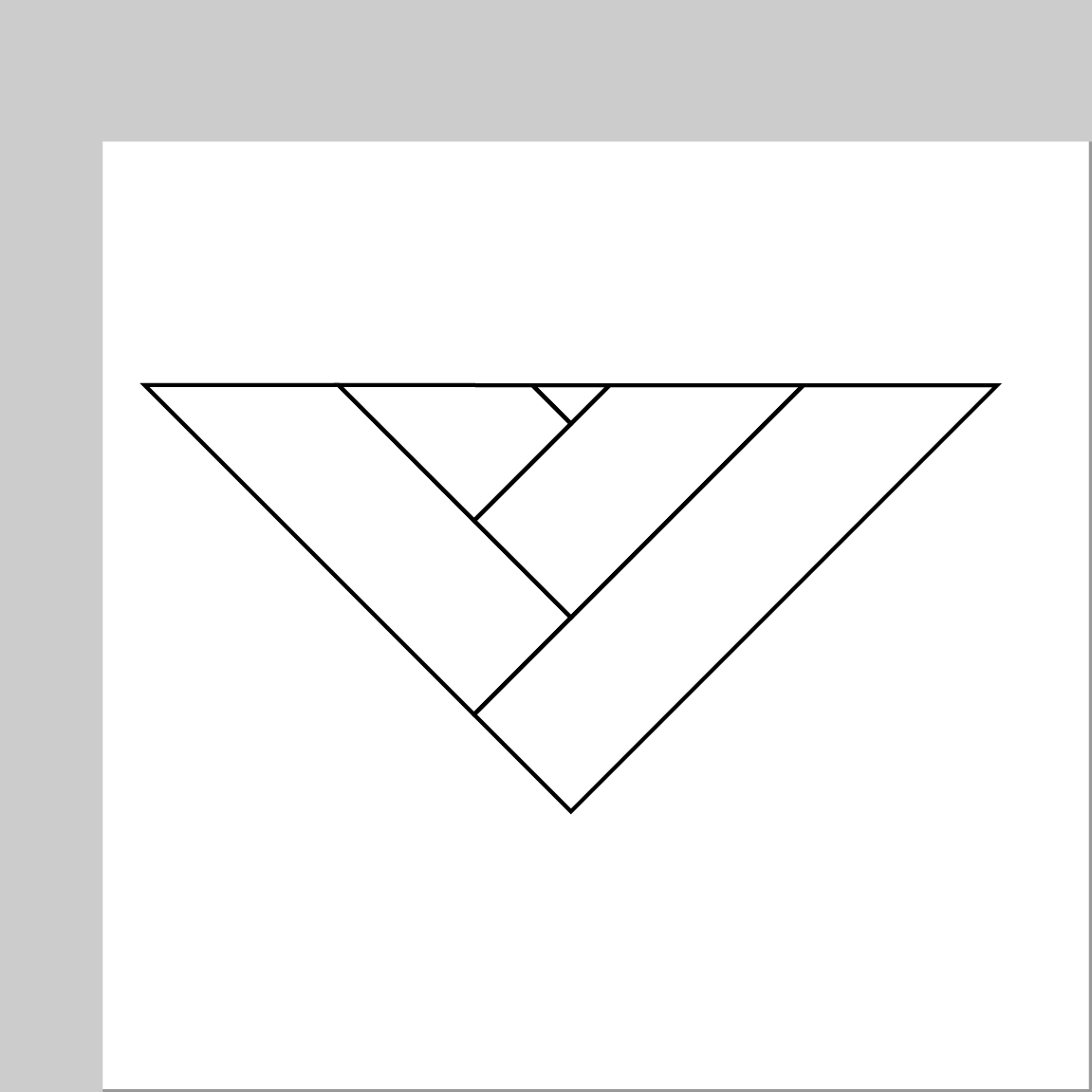
You can also purchase starter triangle kits, which have already been cut to size and glued together by Alsaflooring.
Place the triangles only along the wall.
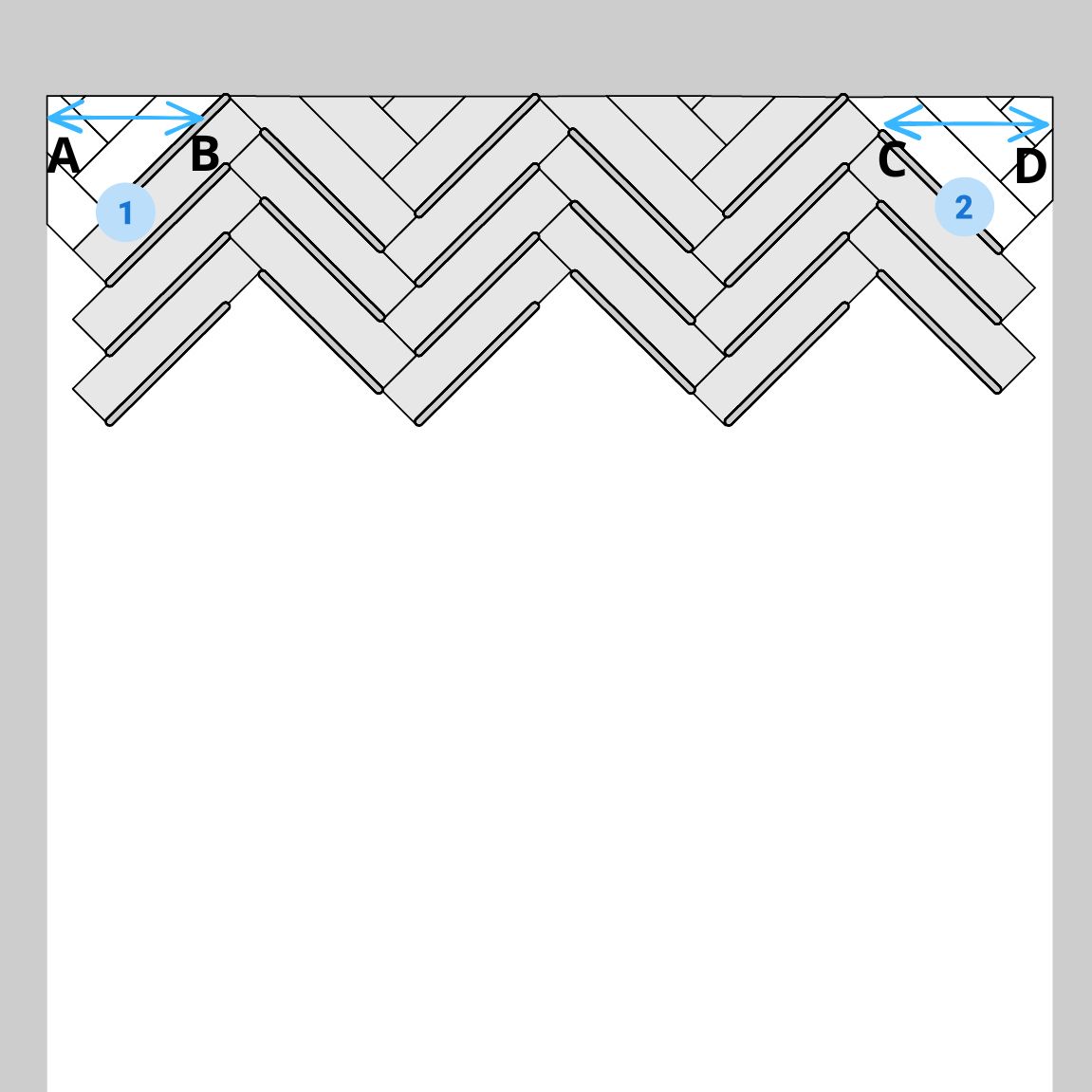
You will then need to cut out the triangles along the edge of the wall.
Reminder: the calculator gives you the dimensions of the AB and CD cut-outs.
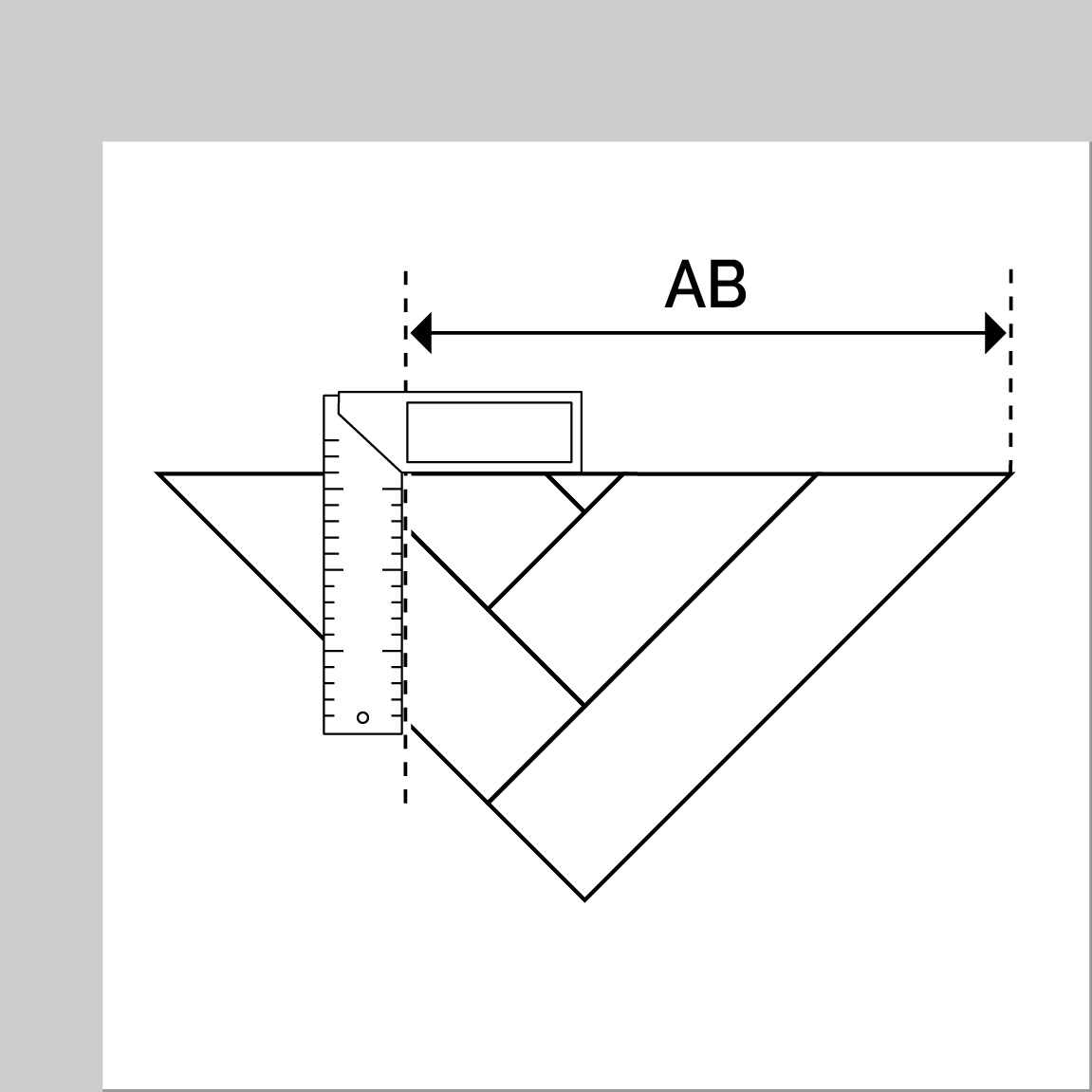
If you are not using the Alsaflooring calculator, you will need to take the measurements yourself. In any case, check that the measurements are correct before cutting out the triangles.
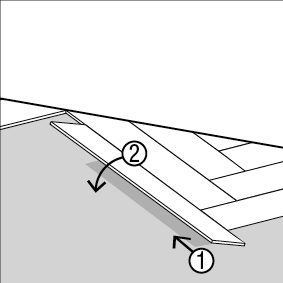
Next, insert the first plank (1) into the groove and then lower it to clip it into place (2).
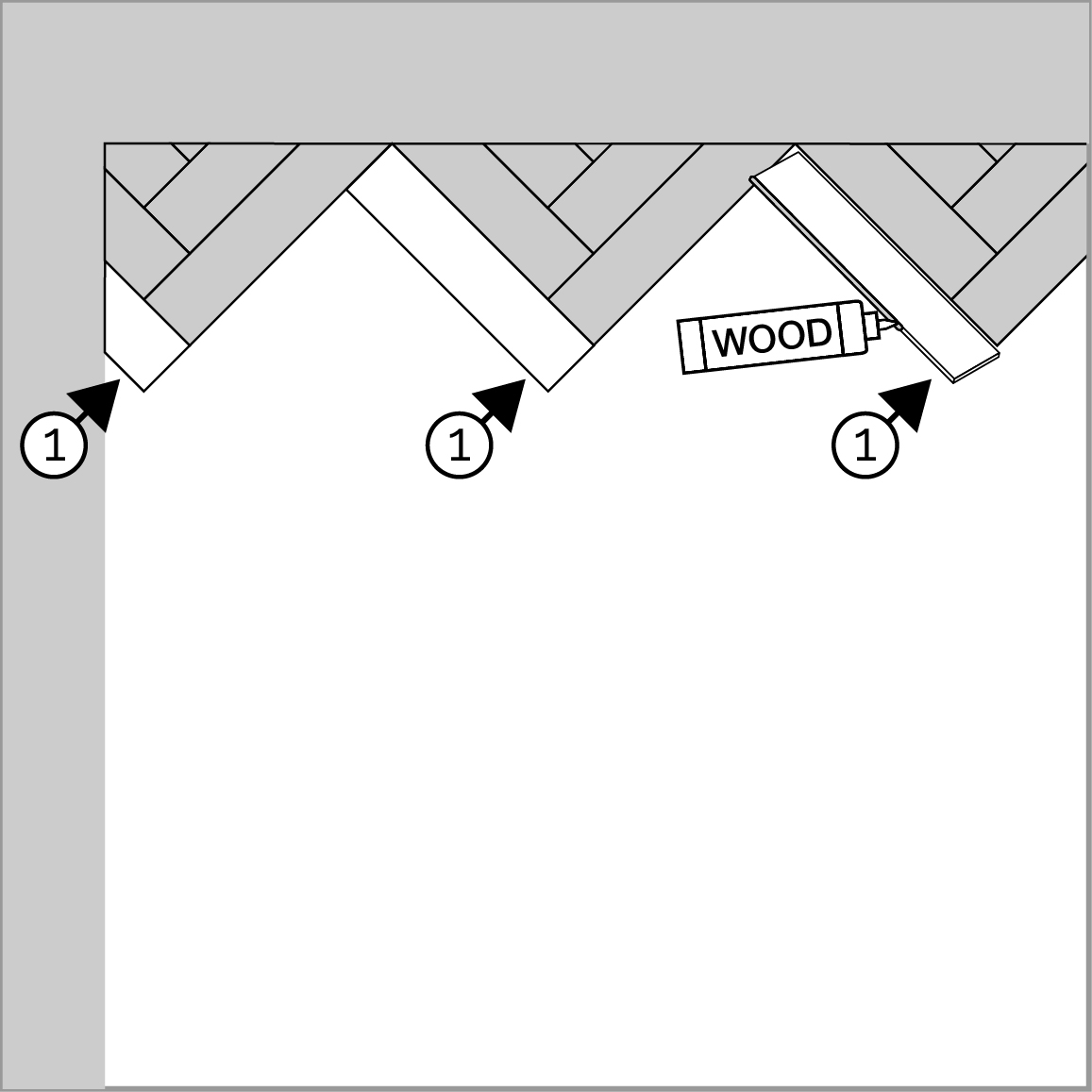
Start by laying out the rows of planks (1).
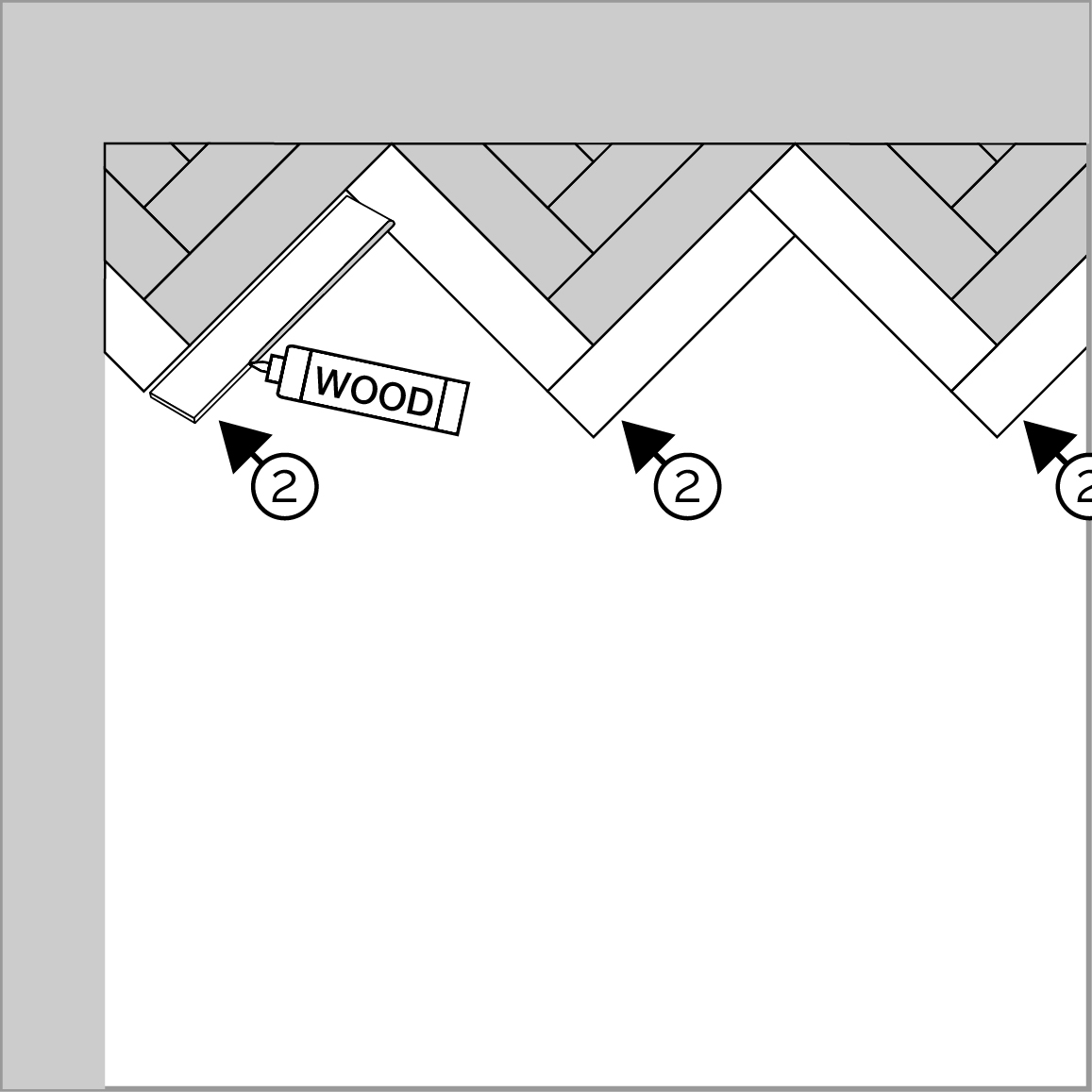
Repeat the process with the rows of planks (2).
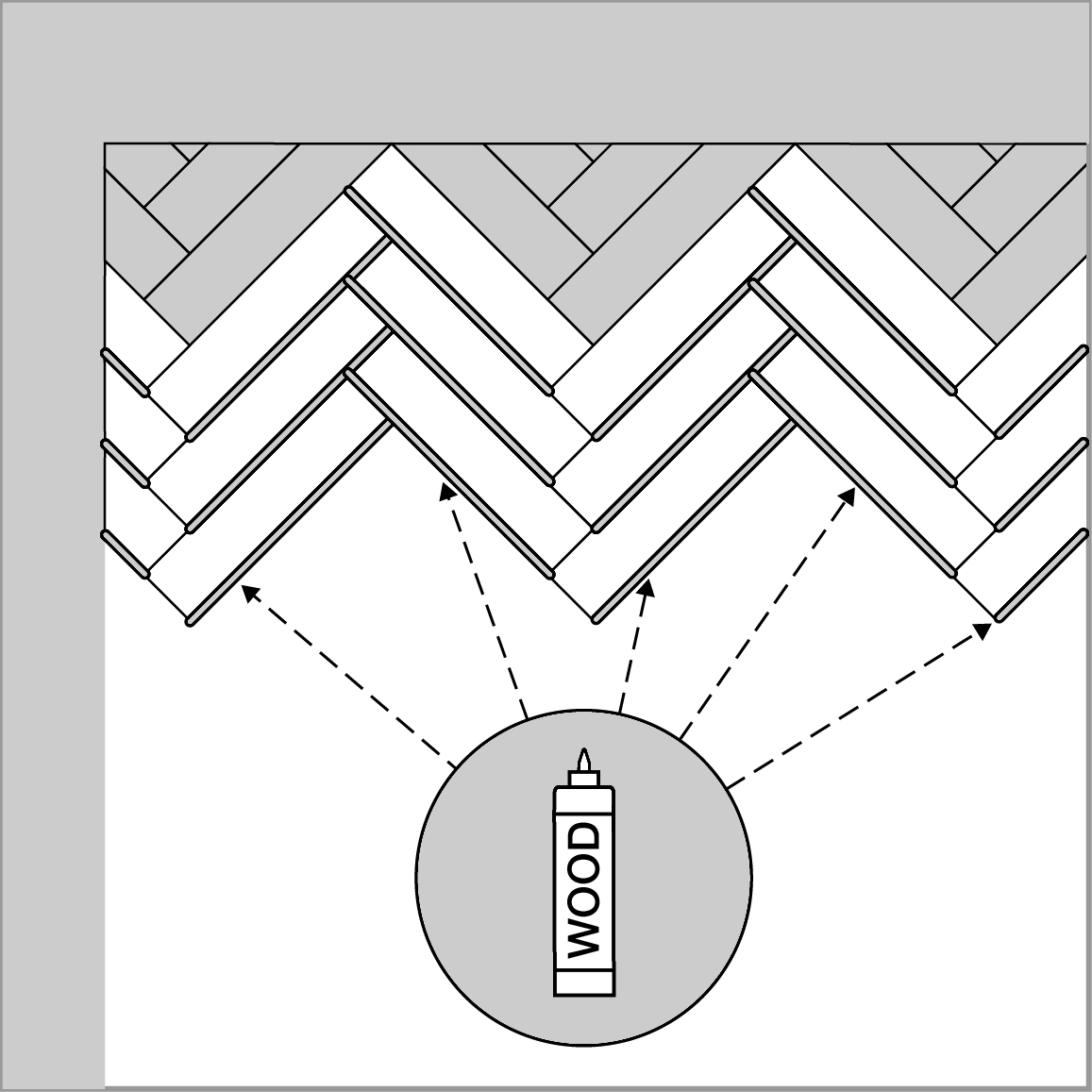
You must GLUE the first 3 rows of planks to ensure the herringbone pattern is laid perfectly.
Important: gluing is mandatory for underfloor heating.
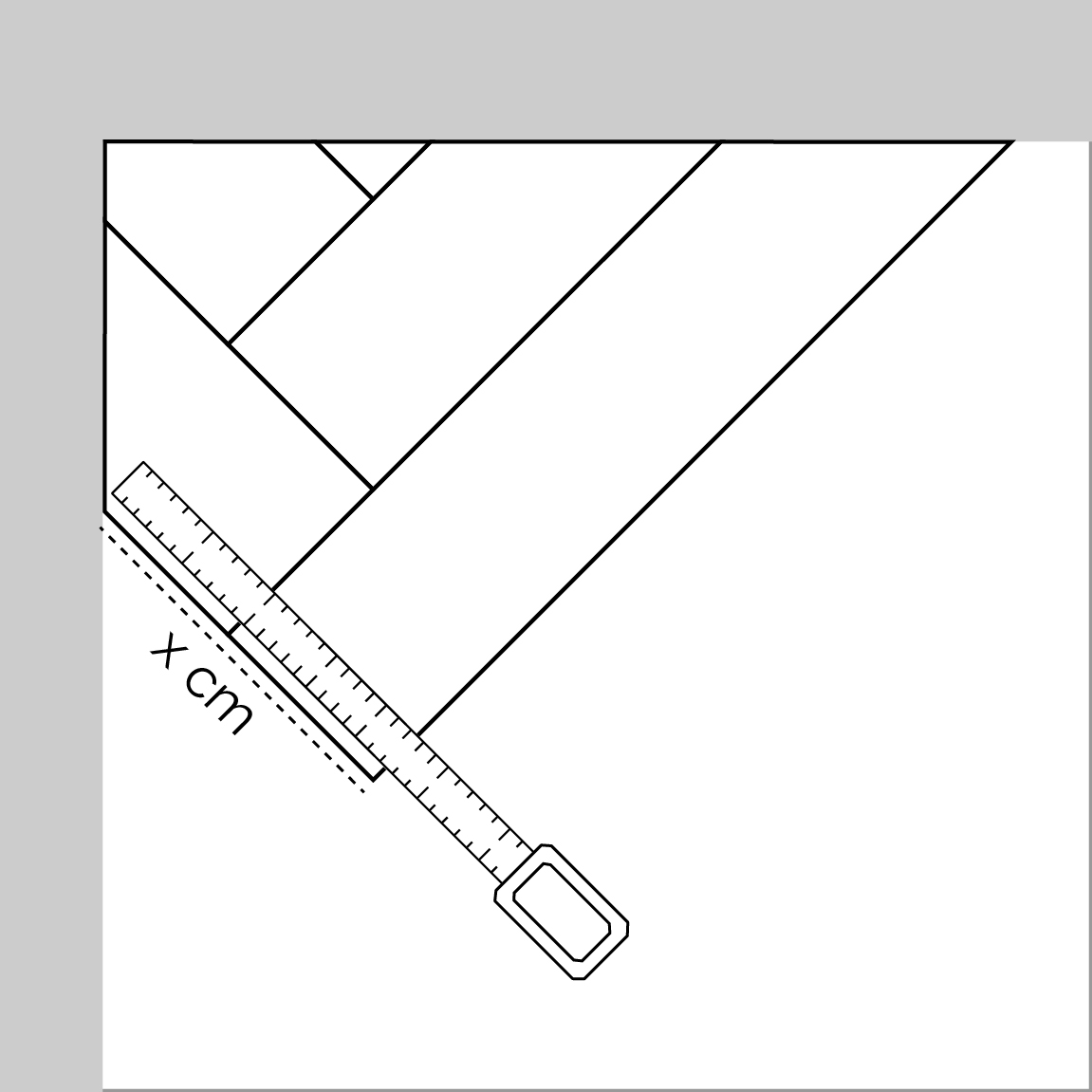
You will need to cut the boards to size along the edges of the room. Measure the area to be cut.
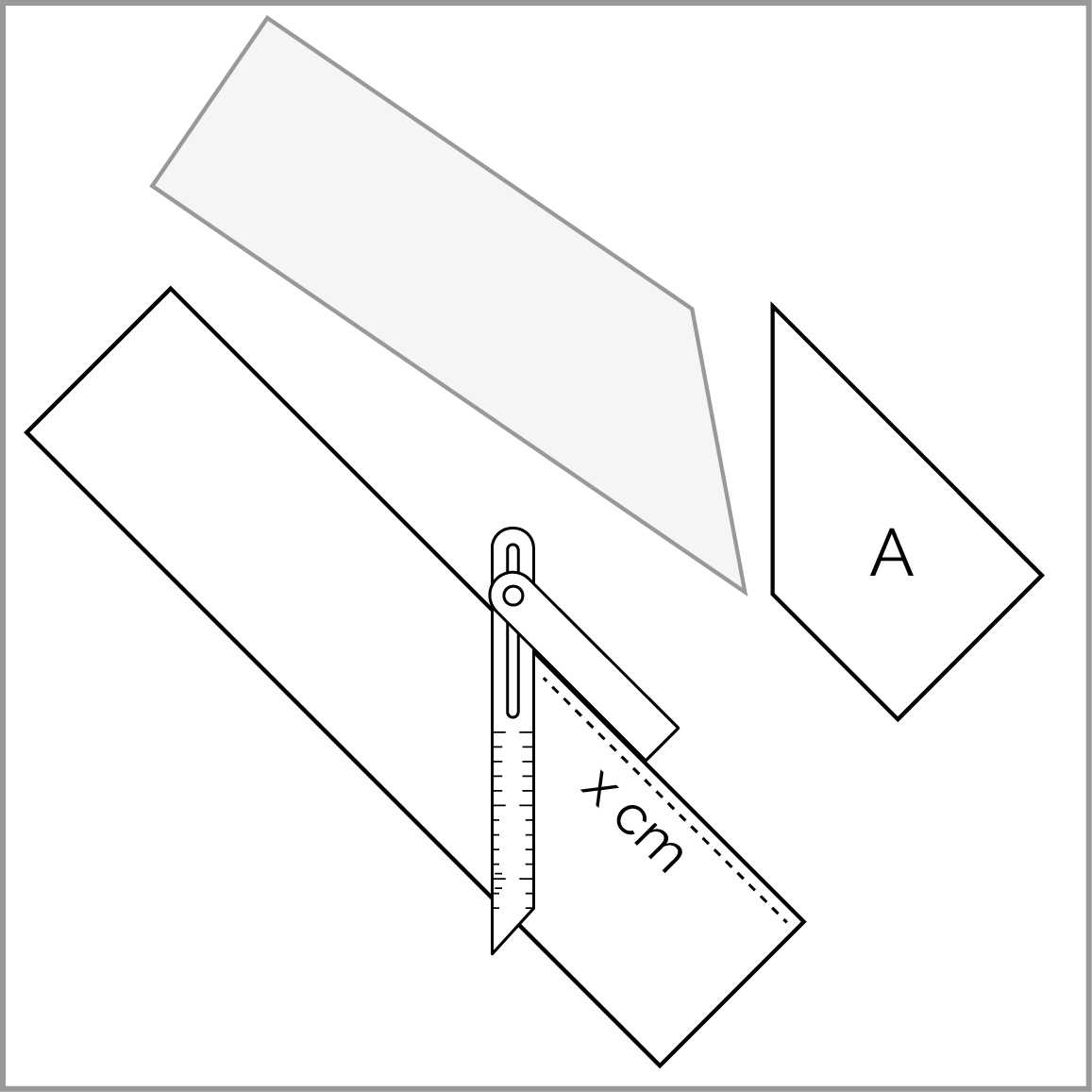
Transfer it onto the cutting board and mark out your cutting line using a T-square. Cut.
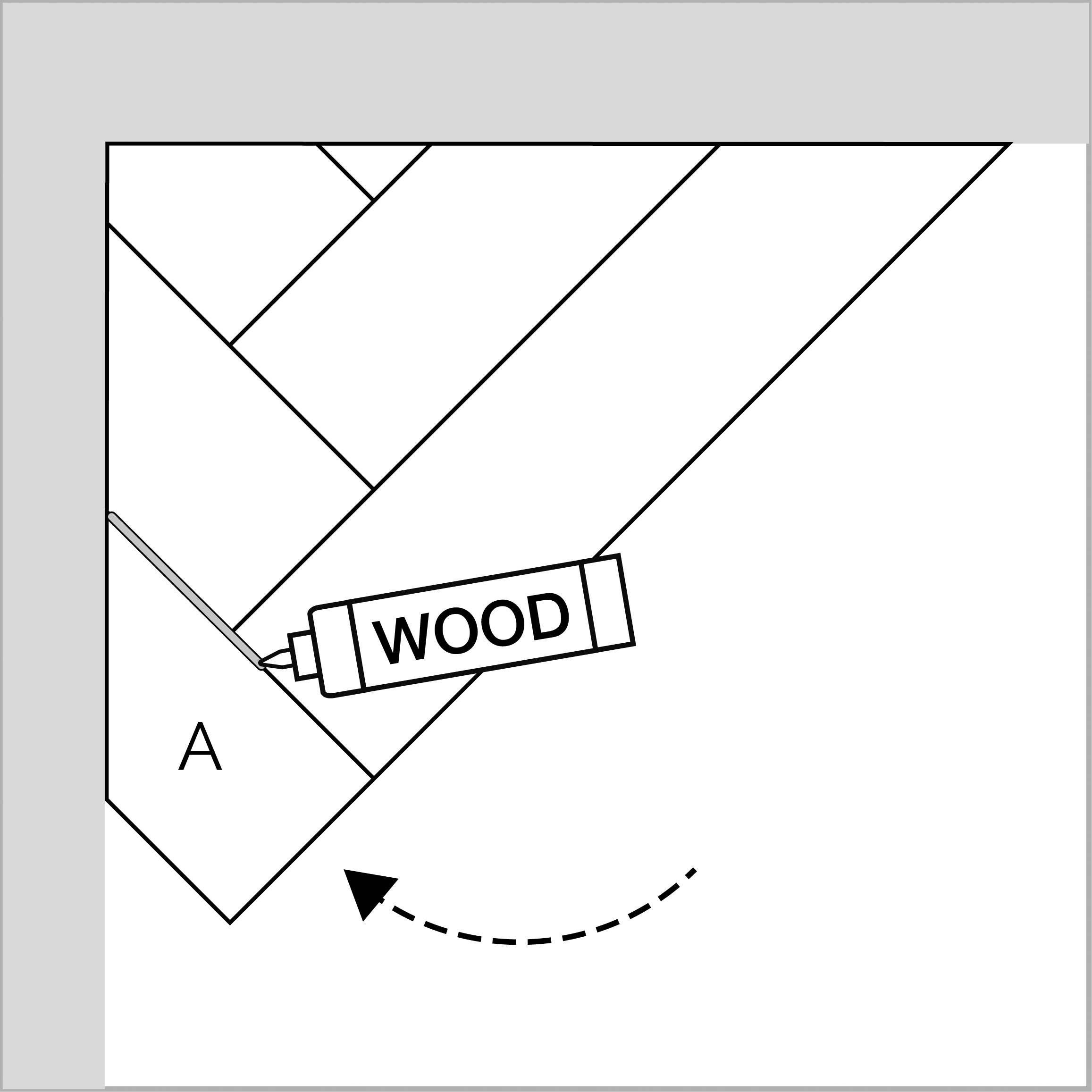
Lay the cut plank along the wall.
Repeat this process for each row, to the right and left of the wall.
You will need to GLUE these small cut planks in place to ensure a flawless herringbone pattern.
Important: gluing is mandatory for underfloor heating.
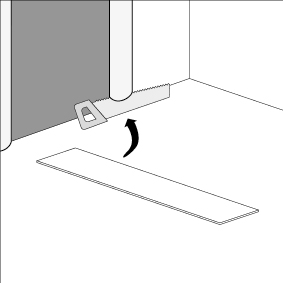
When passing through the doorway, recut the door frame to the new height if necessary.
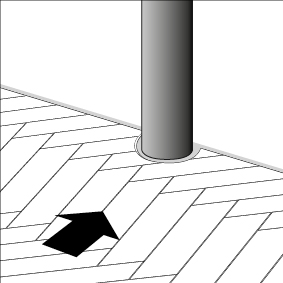
Cut the planks neatly around pipes and other obstacles, always leaving a 10 mm expansion joint.
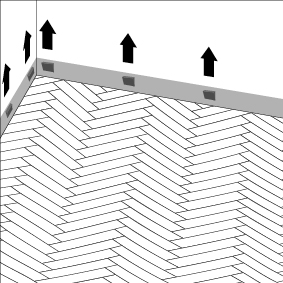
Once all the planks have been laid, remove the expansion wedges placed against the walls.
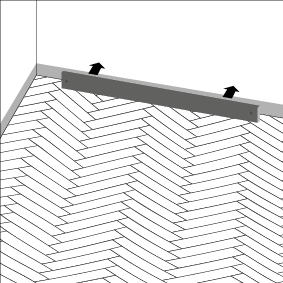
Install skirting boards (or finishing profiles) to cover expansion gaps while allowing the floor to move freely.
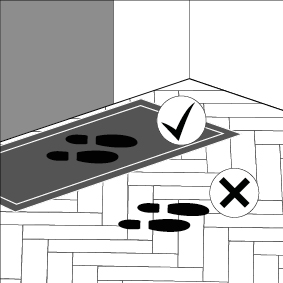
Access points from outside must be equipped with devices that trap moisture and abrasive particles brought in on soles and shoes (mats, doormats, etc.).
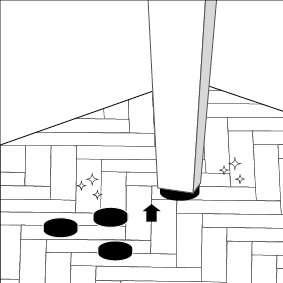
To prevent premature wear, the bases of furniture legs and seats should be fitted with felt or synthetic pads.
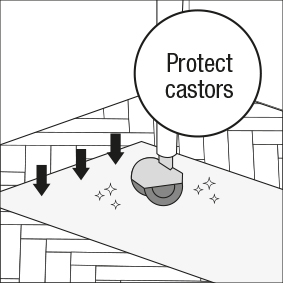
Seats and furniture with castors must be fitted with soft castors of type W.
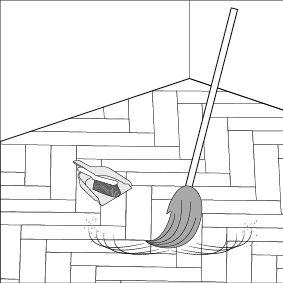
We recommend dry cleaning using a vacuum cleaner with a brush attachment without wheels or a broom. Clean the floor with a slightly damp, well-wrung mop. Do not use any cleaning products.
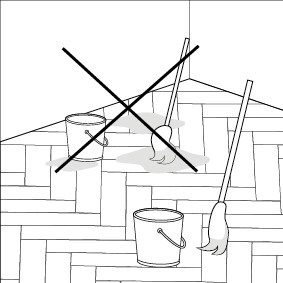
Clean the floor with a slightly damp, well-wrung mop.
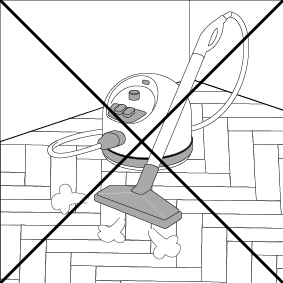
Never use steam cleaners.

To remove a plank, simply lift it up to unclip it and remove it.
 GENERAL INFORMATION
633.72 KB
SUBFLOORS
256.31 KB
INSTALLATION ON UNDERFLOOR HEATING
246.03 KB
UNDERLAYS
693.83 KB
WATER RESISTANT RANGES
314.68 KB
THE GOLDEN RULES
568.19 KB
HEAVY LOADS, CHIMNEY, VERANDA
219.72 KB
HERRINGBONE X LOCK LAYING
812.60 KB
USE AND MAINTENANCE
321.30 KB
REPLACEMENT OF A DAMAGED PLANK
219.62 KB
ECO-FRIENDLY INSTALLATION PRACTICES
249.18 KB
WARRANTY CONDITIONS
240.81 KB
INLAY HERRINGBONE TRIANGLE 2026
329.30 KB
GENERAL INFORMATION
633.72 KB
SUBFLOORS
256.31 KB
INSTALLATION ON UNDERFLOOR HEATING
246.03 KB
UNDERLAYS
693.83 KB
WATER RESISTANT RANGES
314.68 KB
THE GOLDEN RULES
568.19 KB
HEAVY LOADS, CHIMNEY, VERANDA
219.72 KB
HERRINGBONE X LOCK LAYING
812.60 KB
USE AND MAINTENANCE
321.30 KB
REPLACEMENT OF A DAMAGED PLANK
219.62 KB
ECO-FRIENDLY INSTALLATION PRACTICES
249.18 KB
WARRANTY CONDITIONS
240.81 KB
INLAY HERRINGBONE TRIANGLE 2026
329.30 KB